-
 play_arrow
Mutha FM Always Listen to your MUTHA!

apps

LEE DAVEY-BROWN
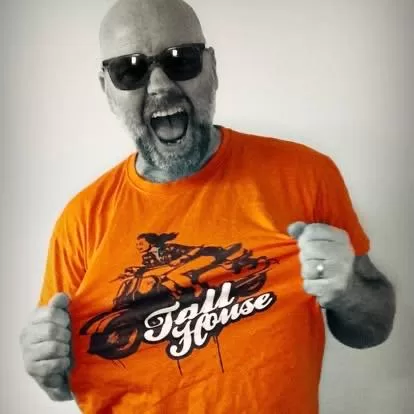
More than three decades after discovering the magic of the DJ booth, Lee Davey-Brown is still driven by the same thing that pulled him into house music in the first place — the feeling of a great record moving a great crowd. From London’s early club scene to South Africa, from vinyl to USBs and now to Mutha FM, his journey is one built on curiosity, instinct and an enduring love for the dancefloor.
THE MOMENT EVERYTHING CHANGED
There was a moment in the early 1990s when Lee Davey-Brown realised that simply being part of the crowd was no longer enough. Standing at Club for Life in Covent Garden, watching Darren Emerson behind the decks, Lee became completely absorbed in what was happening in the DJ booth. While everyone around him was dancing, he found himself watching the DJ instead. Something clicked. He realised that he didn’t want to spend the night on the dancefloor anymore; he wanted to be the person creating the experience. That moment marked the beginning of a career that would take him through some of the most influential clubs and dancefloors in the UK and South Africa.
More than thirty years later, that feeling has never really left him. Lee has watched house music evolve through generations of clubs, technology and musical trends, but the fundamental attraction remains the same. For him, there is nothing quite like standing behind the decks and watching a room respond to music.
WHEN THE MUSIC MATTERS MORE THAN THE DJ
Lee comes from a generation of club culture where the DJ was there to serve the dancefloor. While he has seen the rise of superstar DJs and the increasing focus on the personality behind the decks, he believes the music should remain at the centre of the experience.
There is a certain nostalgia in the way he talks about the old club scene. He remembers a time when people went out to spend time with their friends, dance and become completely absorbed in the music. Today, he sometimes sees audiences more concerned with filming the experience than actually living it. For Lee, that misses the point of what a great night should be.
The best dancefloors are the ones where people forget about everything else. The DJ becomes part of the atmosphere rather than the entire focus, and the crowd and music create something together that cannot be recreated anywhere else.
MEMORIES THAT STAY WITH YOU
Lee’s career has taken him through some of the biggest names in dance music, including Ministry of Sound, Renaissance, Cream and Pacha. Yet when he looks back, some of his most memorable moments come from unexpected places.
One of those moments came at Café del Mar in Ibiza, where he played a sunset set. He was waiting for the daytime DJ to finish while watching the sun move towards the horizon. As the sun disappeared, the previous set ended and Lee began his own. It was a simple transition, but the timing created a moment that has stayed with him.
Another memory came in South Africa, at the former prison where Nelson Mandela was held. Lee was playing outside in the courtyard when the heavens opened and the rain started pouring down. He expected the crowd to disappear indoors, but they didn’t. They stayed outside, listened to the music and eventually danced together in the rain.
Then there is NRG in Bloemfontein, a club Lee remembers for its incredible energy. The crowd was willing to go wherever the music took them, creating the kind of atmosphere every DJ hopes to experience.
SOUTH AFRICA: A CHAPTER THAT NEVER REALLY ENDED
South Africa occupies a very special place in Lee’s musical history. He spent almost three years in the country, including his residency at ESP in Johannesburg, and the experience became an important part of both his personal and professional life.
When he talks about those years, however, it isn’t the clubs that immediately come to mind. It’s the people. Lee made friendships that have lasted long after his time in South Africa ended, and he still remains in contact with many of the people he met during that period.
The South African scene was considerably smaller than the UK scene at the time, and that created a very different atmosphere. Lee could play several clubs in one night and find many of the same people moving between venues. There was a genuine sense of community, with DJs, clubbers and venues all connected to one another.
That close-knit feeling is something he remembers fondly, along with a culture where it seemed as though the party simply never had to end.
WHERE LEE DAVEY-BROWN FOUND HIS SOUND
Lee’s relationship with South Africa went beyond simply playing clubs. He considers the country’s dancefloors, raves and clubs an important part of where he really developed as a DJ. His first remix was also created in South Africa, for singer Wendy Oldfield, further cementing the country’s role in his musical journey.
That influence continues today. Lee remains interested in the sounds emerging from South Africa, particularly Afro House, and has been incorporating more of those influences into his DJ sets and radio shows. He sees the crossover between different musical cultures as one of the things that keeps electronic music moving forward.
For Lee, genres should not exist in isolation. When different scenes and sounds begin influencing one another, something new can emerge.
FOLLOWING THE GROOVE
Trying to define Lee’s sound with one genre doesn’t really work. His music moves through house, tech house, progressive and deeper territory, and he has never been particularly interested in putting himself into a single box.
His philosophy is straightforward: if a track is good, he will play it.
His musical instincts have been shaped by his early experience as a drummer. As a teenager, Lee was the school drummer, and rhythm has remained one of the most important elements of the way he listens to music. He naturally gravitates towards swingy, skippy and shuffling drums, big basslines and vocals that can bring either character or darkness to a track.
For him, the label matters far less than the feeling.
THE ART OF NOT KNOWING WHAT COMES NEXT
One of the defining characteristics of Lee’s DJing is his willingness to leave room for the unexpected. Even today, he can find himself loading last-minute promos onto his USB on the morning of a gig.
That isn’t something he sees as a lack of preparation. Quite the opposite. For Lee, discovery is part of what makes DJing exciting.
Back in the vinyl days, he would often go record shopping before a gig without necessarily knowing exactly what he was going to play. Hearing those records in front of a crowd allowed him to discover the music alongside the people in the room.
That connection is important to him. He questions how a DJ can truly respond to a dancefloor if every part of the set has already been decided before they arrive.
For Lee, the best sets are journeys. The DJ, the music and the crowd discover where they are going together.
FROM VINYL TO USB
Lee has experienced almost every major technological change in DJing. He started with vinyl, moved through CDs and eventually embraced USBs and digital music.
Although he appreciates the possibilities digital technology has created, vinyl still has a special place in his heart. There is something about holding a record, seeing the artwork and physically placing it on a turntable that remains deeply connected to his idea of what DJing is.
At the same time, he has no desire to reject modern technology. Being able to carry an enormous selection of music on a USB is an obvious advantage, particularly when compared with the heavy record boxes DJs once had to drag from venue to venue.
The tools may have changed, but the purpose remains the same: finding the right music for the room.
THE PRODUCER WHO THINKS LIKE A DJ
Lee’s production career has taken him through several different artist identities, including Headliners, Stash, Davey & East and I-Jack. Some of those names came from collaborative projects, while his more recent work has largely been released under his own name.
His approach to production is closely connected to his experience as a DJ. Rather than treating the studio as a completely separate world, he tries to bring the instinct and energy of the dancefloor into the production process.
His tracks often begin with the groove and drums before moving into the bassline. From there, he looks for the defining moment — the part of the track that grabs the listener — and builds everything else around it.
One of the biggest lessons he has learned along the way is knowing when to stop. There will always be another sound that could be added or another detail that could be changed, but eventually a producer has to accept that the track is finished and let it go.
ENTER SEMIDETACHED-HOUSE PARTY
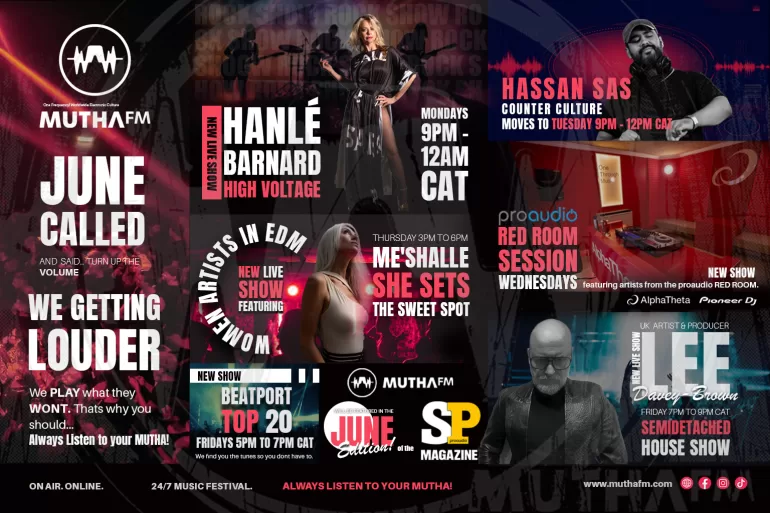
Lee’s approach to music fits naturally into his Mutha FM show, Semidetached-House Party.
Joining Mutha FM gave him the opportunity to reconnect with South Africa musically while becoming part of a station with a global reach. The show is built around the same principles that have shaped his DJ sets for years: variety, discovery and the freedom to move between styles.
Listeners can expect music they recognise alongside records they have never heard before, with a strong focus on unreleased promotional music that Lee receives from artists and producers.
The show deliberately avoids rigid genre boundaries. A listener might arrive expecting one particular sound and suddenly find themselves enjoying something completely different.
That’s part of the fun.
WHY RADIO STILL MATTERS
For Lee, radio remains an important part of electronic music culture because it provides something that streaming platforms cannot completely replicate: human connection.
He remembers the old pirate-radio experience, where DJs spoke directly to their listeners, took shouts and became part of a musical community. Streaming services have made discovering music easier than ever, but Lee believes they can also make the experience more predictable.
An algorithm can recommend something based on what you have already listened to. A DJ can introduce you to something you never knew you wanted to hear.
That element of surprise is still incredibly valuable.
For Lee, radio keeps music discovery human, unpredictable and connected to the people who are actually listening.
STILL EXCITED ABOUT WHAT COMES NEXT
Perhaps the most remarkable thing about Lee’s career is that he isn’t particularly interested in simply looking backwards.
After more than three decades in electronic music, he still gets excited about hearing new records. He loves the classics, but he doesn’t want to spend his career endlessly recycling music from the past.
House music continues to evolve, taking older ideas and turning them into something new. New sounds emerge, different scenes influence one another and producers continue to find new ways of approaching the music.
That constant evolution is what keeps Lee interested.
There is always another record.
Another producer.
Another sound.
Another dancefloor.
And another reason to keep listening.
THE UNDERGROUND NEVER DIES
Lee’s attitude can perhaps be summed up by his answer when asked to choose between underground and mainstage.
“Underground will live forever, baby. Never dying, always living.”
It is a fitting statement from someone whose career has crossed so many generations of dance music.
The technology has changed. The venues have changed. The way people discover music has changed. But the fundamental relationship between DJ, music and crowd remains.
A great record still sounds better when a room full of people reacts to it.
A great DJ still knows when to hold back and when to push.
And a great dancefloor can still make time disappear.
STILL CHASING THE FEELING
After more than three decades of clubs, records, production, radio and countless nights spent behind the decks, Lee Davey-Brown is still here for the same reason he started.
When he is DJing, everything else disappears. He can lose himself in the music, connect with the crowd and forget about everything outside the booth. It is, in his words, his completely happy place.
That may be the real secret to longevity in electronic music. It isn’t necessarily about staying relevant, chasing trends or constantly reinventing yourself. Sometimes it is simply about remaining curious and continuing to love the thing that made you fall in love with it in the first place.
For Lee Davey-Brown, that means continuing to listen, continuing to discover and continuing to follow the music wherever it leads.
Three decades on, the dancefloor is still calling.
And he’s still answering.
Mutha Fm